We accept
Medicare Advantage plans to fit your dental needs.
Medicare Advantage plans to fit your dental needs.

If your teeth are sensitive, you’re probably familiar with the twinges of pain that come eating or drinking steaming hot or very cold foods and beverages. Hot coffee, iced tea or ice cream can cause a sudden jolt of pain. Sometimes, sweet or acidic triggered sensitivity as well. The pain may only last a second or two, but it can take you by surprise if you forget to let your food or drink reach room temperature. Fortunately, sensitive teeth are treatable.
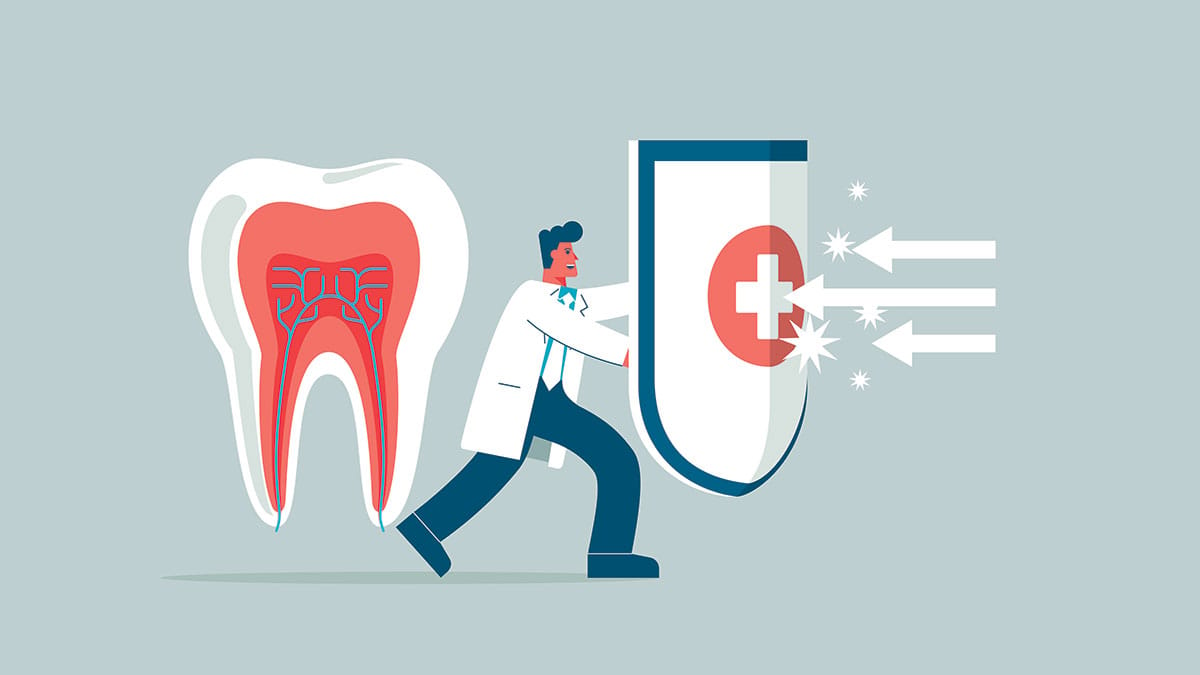
When you know the anatomy of your teeth, you can better understand how teeth sensitivity occurs. Exposed dentin causes tooth sensitivity. The crowns of teeth have enamel covering them to protect the dentin, which contains tiny tunnels that connect to the nerves inside teeth. Teeth roots have cementum protecting the dentin, but it isn’t as hard as enamel, so enamel wear and gum recession can both cause sensitivity.
About one in eight Americans have sensitive teeth. While the condition is very common, it is also highly treatable. Don’t let tooth sensitivity limit what you eat and drink. See your dentist to learn why you’re experiencing sensitivity and learn about your treatment options.
Everything from dental care products you use to damage to a tooth can cause sensitivity. Usually, if you have one tooth that’s sensitive, it’s because of a cavity or other issue in the tooth. When all of your teeth, or at least most of them, are sensitive, it could be related to your dental care habits and the foods and drinks you consume.
Typical causes related to your choice of products you use at home and your diet include:
If you notice one tooth is suddenly sensitive, it typically is a sign of a dental problem. See your dentist for a diagnosis and learn about your treatment options.
You can use a desensitizing toothpaste, which block sensations of hot and cold from reaching the nerves. It may take days or weeks before you notice results. While effective, a desensitizing toothpaste does not address the cause for your teeth sensitivity. You should still talk to your dentist, who may suggest a fluoride treatment or another long-term solution.
Limit your intake of acidic foods and drinks. If you do indulge, consume them during a meal when saliva can help wash away the acid. Use a straw to drink acidic drinks between meals to avoid prolonged exposure to your teeth. Rinse your mouth with water afterward.
Increase the fluoride in your diet to help strengthen your enamel. Tap water is ideal is you have fluoridated municipal water, Black tea is also a good source of fluoride.
Keep up with your regular dental exams. Your dentist can check for any problems that could cause sensitivity in they are left untreated. Always practice good dental hygiene at home too. You can help prevent cavities, gum disease and other dental problems that can cause sensitivity when you have regular checkups.
Teeth sensitivity is irritating, but it doesn’t have to be. Just because your teeth look healthy and the jolts of pain are temporary, does not mean you can ignore the problem and think it will get better on its own. Teeth sensitivity will not get better on its own, it requires a professional dental solution. See a dentist to find out why it’s happening and can do to stop the flashes of pain.